
© 2026 بيديكس. جميع الحقوق محفوظة
العلامة التجارية بيديكس مملوكة لشركة يوروتك.
© 2026 بيديكس. جميع الحقوق محفوظة
العلامة التجارية بيديكس مملوكة لشركة يوروتك.
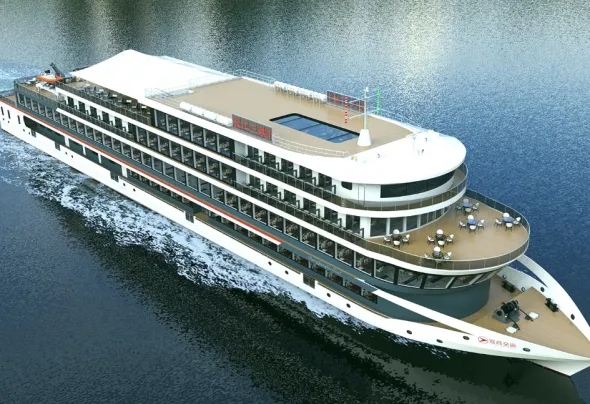
With global shifts toward sustainability and the reduction of carbon emissions, CATL, a leader in manufacturing electric vehicle batteries, is now emerging as a major player in maritime transport.
The company has announced plans to develop environmentally friendly electric vessels, reshaping the concept of sailing and providing green alternatives in the world of water transportation.
This report details CATL's achievements in this sector, analyzing the key advantages and future prospects of this technology, with a focus on innovation and sustainability.
CATL began its maritime activities in 2017, then established a dedicated maritime transport unit in late 2022 to supply ships with advanced electric power systems and batteries. To date, CATL has supplied hundreds of vessels with electric systems, granting it a significant share of the global electric ship market.
The company's expansion into electric vessels is not limited to small or tourist boats but includes ambitious projects for ships operating on rivers and coastlines, with plans to soon develop ocean-going vessels. This move reflects CATL's confidence in its technologies and designs to cover various navigation conditions.
Yujian 77: CATL's first fully electric passenger vessel, which operates with batteries providing an operating range of up to 100 kilometers on a single charge, making it suitable for coastal trips.
Electric Cargo Ships: A practical model for commercial vessels operating with batteries of a large total capacity, capable of sailing long distances on a single charge, with the possibility of quick battery swapping, which enhances operational efficiency.
These achievements confirm that electric maritime transport has become a tangible reality, and that CATL is capable of redefining the concept of sailing in terms of energy, operational efficiency, and sustainability.
Founded in 2011, CATL quickly established itself as the largest electric vehicle battery manufacturer globally. With a large market share, CATL did not stop at the automotive sector but expanded its activity to include industrial batteries, energy solutions, and smart infrastructure.
Through its dedicated maritime transport unit, CATL provides integrated solutions including batteries, charging or swapping systems, and smart data management to ensure operational efficiency and safety. This strategy makes the company a pivotal player in the future of sustainable maritime transport, offering solutions that are environmentally friendly, economical, and safe.
CATL's batteries for ships rely on advanced technologies that grant them high energy density and excellent operational safety, along with intelligent energy management systems that ensure stability during sailing. The company’s integrated system also includes battery management, charging or swapping, port infrastructure, and a smart platform for monitoring the vessel and optimizing performance, which reduces operating costs and increases usage flexibility.
Despite the progress, electric maritime transport faces some challenges such as limited range compared to conventional vessels, and the need for charging or battery swapping infrastructure. However, CATL is working on developing innovative solutions to overcome these challenges, including fast battery swapping systems, smart energy management, and expanding the infrastructure network in ports.
The increasing global demand for environmentally friendly maritime transport, and the trend of ports moving toward "green ports," open wide horizons for adopting this technology on a broader scale, enhancing CATL's opportunities in international markets.
With CATL's forceful entry into the world of maritime transport and the development of the first already operating electric vessels, the future of sailing appears to be heading towards clean energy and sustainability. These vessels represent not just a technical evolution, but a philosophical shift in how humanity interacts with the sea and transport.
Thanks to innovation, operational efficiency, and environmental commitment, CATL becomes a key player in shaping sustainable maritime transport, with the possibility of seeing an electric "yacht" or "ship" in global ports sailing without emissions, transporting passengers and goods in a safer, more efficient, and environmentally friendly manner.