
© 2026 بيديكس. جميع الحقوق محفوظة
العلامة التجارية بيديكس مملوكة لشركة يوروتك.
© 2026 بيديكس. جميع الحقوق محفوظة
العلامة التجارية بيديكس مملوكة لشركة يوروتك.
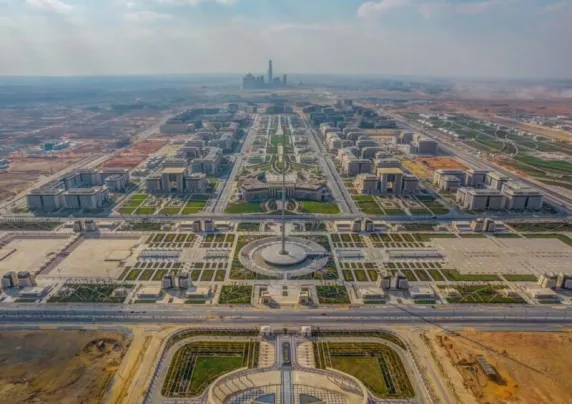
Egypt’s New Administrative Capital (NAC) has quickly risen as one of the most ambitious urban projects in the Middle East. As interest grows among investors, homeowners, and developers, one critical factor stands out: the New Administrative Capital area.
In this article, we answer the most frequently asked questions about the size, distribution, and investment potential of the NAC. Understanding how the area is structured can be the key to making smart real estate decisions in Egypt’s newest smart city.
The New Administrative Capital area covers an impressive total of approximately 170,000 feddans (about 714 square kilometers). That’s more than twice the size of Greater Cairo!
Key facts:
This vast area makes NAC the largest urban development project in modern Egyptian history.
One of the most unique features of the New Administrative Capital area is its well-planned zoning:
This careful distribution provides a balanced environment for living, working, and investing.
The Government District is the administrative heart of the NAC and one of the first areas to be completed:
Its central location and high-security design reflect the city's futuristic and organized urban vision.
Residential zones occupy a significant portion of the New Administrative Capital area, offering a wide range of units and lifestyles:
This allocation ensures that housing demand is met for both middle-income and high-end segments.
Green space is one of the most impressive aspects of NAC’s planning:
This approach enhances quality of life and adds significant value to nearby properties.
Understanding the New Administrative Capital area isn’t just helpful—it’s essential. Here’s why:
Real estate decisions in the NAC should always be based on location intelligence, not just prices.
Yes — and by a wide margin. The New Administrative Capital area is significantly larger than Cairo:
That means the New Capital is more than twice the size of Cairo, offering vast space for structured development, modern infrastructure, and futuristic urban planning.
This size advantage supports smart traffic flow, organized zoning, and low population density compared to the capital’s overcrowding.
The New Administrative Capital area is being developed in three phases. Each has a unique role in the city’s long-term vision.
This staged development ensures balanced growth and investment potential over the next decade.
The CBD is the economic engine of the New Capital and a key driver of commercial real estate:
Its strategic location in the heart of the New Administrative Capital area boosts its value for long-term commercial investments.
Absolutely. Commercial spaces have been carefully allocated across the New Administrative Capital area to meet future demand:
These diverse commercial offerings make the New Capital a rising destination for entrepreneurs and corporate expansions.
Yes, and that’s one of its core strengths:
The New Administrative Capital area was not built just for today — it’s engineered to grow with Egypt’s population and economy for decades to come.
Location and area planning play a huge role in real estate ROI — and NAC is a textbook example:
In short, the New Administrative Capital area offers investors a rare chance to get in early on a city built for the future.
The New Administrative Capital area is more than just land — it's the foundation of Egypt's future. From its massive scale to smart urban planning, the NAC offers exceptional opportunities for investors, homeowners, and developers alike.
By understanding the zoning, phase distribution, and green spaces, you can make informed real estate decisions that align with your goals. Whether you're investing in a residential apartment or launching a commercial project, area knowledge is power.
1. How big is the New Administrative Capital area?
The NAC spans approximately 170,000 feddans (around 714 km²), making it one of the largest planned cities in the region.
2. Is the New Administrative Capital larger than Cairo?
Yes. The New Administrative Capital is more than twice the size of Cairo, offering ample room for expansion, smart zoning, and modern infrastructure.
3. What percentage of the New Administrative Capital area is residential?
Roughly 40% of the total area is allocated to residential zones, including government-developed housing and private compounds.
4. Are there enough commercial zones in the New Administrative Capital?
Absolutely. Key areas like Downtown and the Central Business District are designed to support large-scale commercial activity.
5. Why should investors care about the size of the New Capital?
Understanding the city's scale helps investors identify high-growth zones, evaluate proximity to key landmarks, and forecast property value appreciation.
6. How does the area distribution affect property prices?
Properties near the CBD, parks, or government districts tend to have higher value due to their location, accessibility, and future potential.