
© 2026 بيديكس. جميع الحقوق محفوظة
العلامة التجارية بيديكس مملوكة لشركة يوروتك.
© 2026 بيديكس. جميع الحقوق محفوظة
العلامة التجارية بيديكس مملوكة لشركة يوروتك.
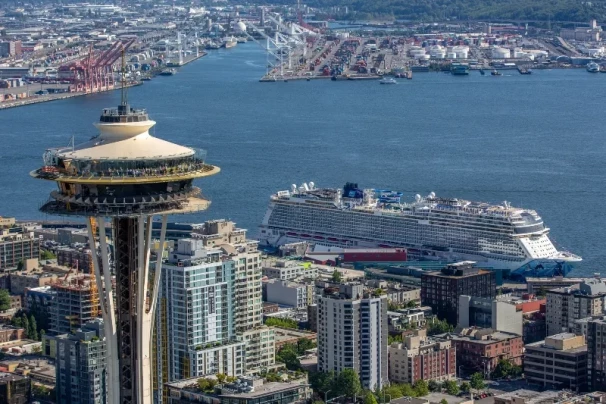
In a strategic move that reflects Seattle’s deep commitment to environmental transformation, the Port of Seattle has unveiled the “Seattle Waterfront Clean Energy Strategy,” a comprehensive plan designed to meet the city’s growing electricity demands by 2050.
This initiative comes at a critical time, as global ports face increasing environmental challenges. Seattle stands out as one of the first cities to adopt an integrated approach to achieving carbon neutrality in maritime transport and coastal infrastructure.
Developed in partnership with The Northwest Seaport Alliance and Seattle City Light, the strategy aims to support full electrification of buildings, vehicles, vessels, and equipment across Port-owned properties.
Projections indicate that electricity demand during peak operations will quadruple by 2050, making investments in clean energy infrastructure essential to ensure operational continuity and meet environmental goals.
The Seattle Waterfront Clean Energy Strategy includes a series of technical, policy, and planning recommendations based on a comprehensive analysis of Port-owned sites along Elliott Bay, the Duwamish River, Shilshole Bay, and the Lake Washington Ship Canal.
Key components of the plan include:
Shore power is a cornerstone of the strategy, allowing cruise and cargo ships to shut down their engines while docked and connect to the local power grid. This significantly reduces harmful emissions and noise pollution.
Port of Seattle Commissioner Fred Felleman stated:
“Installing shore power at marine terminals is a key part of our commitment to becoming the greenest port in North America.”
He added that the partnership with The Northwest Seaport Alliance and Seattle City Light is essential to ensure sufficient power supply to meet the growing demand, especially as more ships, trucks, cargo-handling equipment, and even Coast Guard facilities transition to electric power.
The estimated investment required to implement the strategy ranges from 208millionto208 million to 208millionto457 million through 2050. These investments cover:
Despite the high costs, the report suggests that upgrading existing infrastructure is the most cost-effective option compared to building new systems from scratch.
Dawn Lindell, General Manager and CEO of Seattle City Light, praised the ongoing partnership with the Port of Seattle, describing it as a model of successful institutional collaboration.
She said:
“By working together, we’re making waterfront and maritime electrification a reality. Our holistic and innovative approach ensures a clean energy future for our region.”
Seattle’s Clean Energy Strategy stands out for several core features that position it as a model for urban environmental planning:
The Port of Seattle is one of the most active ports on the U.S. West Coast and serves as a major gateway for trade with Asia. It is also a key hub for cruise operations in the North Pacific.
Despite its ambitious goals, the strategy faces several challenges that must be managed carefully, including:
However, with a clear roadmap, trusted partners, and strong political and public support, these challenges can be transformed into opportunities for growth and innovation.
Seattle’s Clean Energy Strategy is a bold step toward a zero-emissions future, where environmental vision meets smart urban planning.
The city’s commitment to achieving carbon neutrality in its port operations by 2050 reflects a forward-thinking approach that balances economic development with environmental preservation.
In a rapidly changing world, Seattle proves that sustainability is not a luxury—it’s a necessity. And smart planning today is the key to a cleaner, smarter tomorrow.