8 Causes of Car Engine Overheating and How to Deal With Them
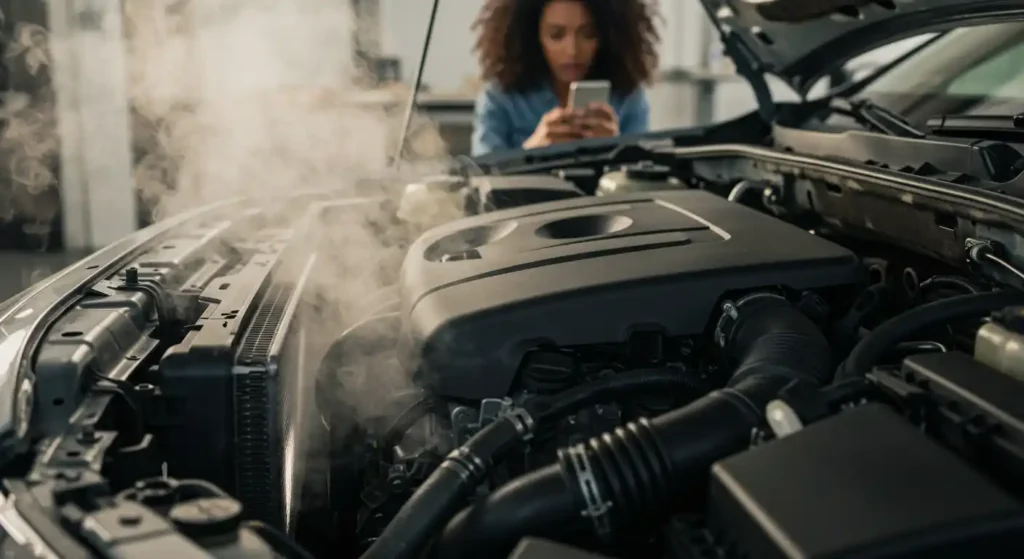
Some drivers experience engine overheating while driving, particularly in hot weather and heavy traffic. This problem can cause serious mechanical damage if it is not handled correctly.
Engines rely on a cooling system to regulate operating temperatures. Heat is transferred from the engine to the coolant and then to the radiator, where it is released into the surrounding air with the assistance of the water pump, cooling fan and thermostat.
When one of these components malfunctions, engine temperature may rise beyond its normal operating range, affecting performance and increasing the risk of internal damage.
Normal operating temperatures vary between vehicles depending on engine and cooling system design. Drivers should therefore rely on their vehicle's temperature gauge or warning messages rather than assuming that one temperature value applies to every model.
The main causes of overheating include low coolant levels, cooling fan failures, thermostat problems, radiator blockages, water pump defects, pressure cap failures and certain lubrication-related problems.
1. Low Coolant Levels or Cooling System Leaks
Low coolant levels are among the most common causes of engine overheating because insufficient coolant reduces the system's ability to transfer and dissipate heat.
Coolant loss may result from leaks in hoses, the radiator, expansion tank or connections, as well as damaged gaskets and seals.
Possible warning signs include fluid stains beneath the vehicle, repeated decreases in the expansion tank level or unusual smells coming from the engine compartment.
In some cases, internal leaks may cause coolant loss without producing visible signs outside the vehicle.
Coolant levels should be checked according to the manufacturer's instructions, while hoses and connections should be inspected for leaks.
Repeatedly adding coolant without identifying the cause of the loss is not recommended because an unresolved leak may lead to sudden overheating.
2. Cooling Fan Failure
The cooling fan helps move air through the radiator, particularly when the vehicle is stationary or traveling at low speeds.
If the fan stops working or fails to operate at the required speed, engine temperature may rise during traffic congestion or prolonged idling.
Possible causes include a defective fan motor, blown fuse, faulty relay, sensor malfunction or problems in the electrical control system.
One possible symptom is an increase in engine temperature while stationary, followed by a relative decrease when the vehicle moves fast enough to provide greater airflow through the radiator.
However, this pattern does not conclusively establish that the cooling fan is defective because other cooling system problems can produce similar symptoms.
Diagnosis requires examining the fan and its electrical components using appropriate equipment.
Drivers should avoid approaching the fan blades because some vehicles allow the cooling fan to start automatically even when the engine is switched off.
3. Thermostat Failure and Restricted Coolant Circulation
The thermostat controls coolant flow between the engine and radiator according to temperature, helping the engine reach and maintain its intended operating range.
If the thermostat becomes stuck in the closed position, coolant may not circulate adequately through the radiator, causing engine temperature to rise rapidly.
If it remains permanently open, the engine may take longer to reach its proper operating temperature, potentially affecting cabin heating performance or fuel consumption in some circumstances.
A specialized inspection is required to determine whether the thermostat is functioning correctly and allowing appropriate coolant circulation.
Permanently removing the thermostat is not recommended as a solution to overheating because the engine and its management systems are designed to operate within a specified temperature range.
4. Radiator Blockages or Reduced Cooling Efficiency
The radiator dissipates heat carried by the coolant from the engine into the surrounding air.
Its efficiency may decline because of deposits accumulating inside coolant passages, dirt and insects blocking external fins, or physical damage.
Unsuitable modifications to the front of the vehicle or obstructions that restrict airflow may also reduce cooling performance.
Depending on the extent of the blockage and the condition of other components, overheating may become more noticeable under heavy loads, while using air conditioning or during hot weather.
The radiator should be inspected for leaks and blockages, then cleaned, repaired or replaced according to its condition.
Cleaning chemicals or additives that are not suitable for the cooling system should not be used without consulting the manufacturer's recommendations.
5. Weak or Defective Water Pump
The water pump circulates coolant through the engine and radiator and is essential for maintaining the correct operating temperature.
If the pump becomes weak or its internal components deteriorate, coolant flow may decrease, reducing the system's ability to carry heat away from the engine.
Possible symptoms include coolant leakage around the pump, unusual noises or repeated increases in engine temperature.
Some vehicles use mechanically driven water pumps, while others are equipped with electric pumps.
Diagnostic and repair procedures therefore vary depending on the vehicle's design.
The pump and its operating components should be examined when inadequate coolant circulation is suspected rather than replacing the pump without confirming the cause.
6. Damaged Radiator or Expansion Tank Pressure Cap
The cooling system pressure cap helps maintain the specified pressure inside the system, raising the coolant's boiling point and reducing coolant loss during operation.
If the cap becomes defective or can no longer maintain the required pressure, coolant may boil at a lower temperature or escape from the system.
Possible symptoms include falling coolant levels, coolant overflowing from the expansion tank or repeated overheating.
The location of the pressure cap varies between vehicles. It may be fitted to the radiator or the expansion tank, depending on the system's design.
The cap should be inspected and replaced with a component that meets the manufacturer's specifications if a defect is confirmed.
Drivers must never open a pressurized radiator or expansion tank cap while the engine is hot because escaping coolant and steam can cause serious burns.
7. Low Engine Oil Levels or Lubrication Problems
Engine oil helps reduce friction between moving components and transfers some heat away from certain internal parts.
When oil levels become severely low or lubrication pressure is disrupted, friction may increase and some components may operate at higher temperatures.
However, engine overheating does not necessarily indicate low oil levels because the cooling system remains primarily responsible for controlling operating temperatures in most liquid-cooled engines.
Oil levels and condition should be checked according to the manufacturer's instructions, while monitoring any oil pressure warnings.
If the oil pressure warning light illuminates while driving, the driver should stop in a safe location and switch off the engine immediately because continued operation may rapidly damage internal components.
8. Blown Head Gasket or Internal Coolant Leakage
A damaged cylinder head gasket may allow leakage between combustion chambers and coolant or oil passages, depending on the location of the failure.
This problem may cause overheating, coolant loss or abnormally high pressure inside the cooling system.
Possible symptoms include persistent coolant loss without visible external leakage, thick white exhaust smoke that continues after the engine reaches operating temperature, or unusual bubbling inside the expansion tank.
Oil and coolant may also mix in some cases, although this symptom is not present in every head gasket failure.
Diagnosis requires specialized testing, such as checking for combustion gases in the coolant or performing a cooling system pressure test.
The vehicle should not continue to be driven if a confirmed defect is causing severe overheating or rapid coolant loss, as additional engine damage may occur.
What Should Drivers Do When Their Car Overheats?
If the temperature gauge rises abnormally or a warning message appears, drivers should reduce engine load, switch off the air conditioning and move to a safe stopping location as soon as possible.
If the engine temperature becomes dangerously high, steam emerges from the engine compartment or a warning instructs the driver to stop the engine, the vehicle should be stopped safely and the engine switched off immediately.
Continuing to drive in the hope that the temperature will decrease is not advisable because prolonged overheating may damage the cylinder head gasket or distort engine components.
If there is a burning smell or heavy steam, drivers should stay away from hot components and avoid touching the engine or cooling system.
The engine should be allowed to cool completely before checking coolant levels, following the manufacturer's instructions.
A pressurized cooling system cap must not be opened while hot, and cold water should not be poured onto a severely overheated engine in an attempt to cool it rapidly.
If the coolant level is low, additional fluid should only be added once the system has cooled sufficiently and can be opened safely, using coolant that meets the required specifications.
If there is an obvious leak, overheating persists or the cause cannot be determined, having the vehicle transported by a recovery service is preferable to driving it to a repair center.
Can Turning on the Heater Reduce Engine Temperature?
In some vehicles, setting the cabin heater to its highest temperature may help remove a limited amount of heat from the coolant because the heating system uses a heat exchanger connected to the cooling circuit.
However, the effectiveness of this measure is limited and depends on the cooling system functioning correctly and containing sufficient coolant.
Using the heater does not repair a faulty fan, pump or thermostat and should not be treated as a reason to continue driving with severe overheating.
It may only serve as a temporary measure while reaching a safe stopping location, provided driving conditions permit and no warning requires the engine to be switched off immediately.
Can Adding Water Solve an Overheating Problem?
Low coolant levels may cause overheating, but adding water does not resolve the underlying problem if there is a leak, blockage or malfunctioning cooling system component.
Drivers should use coolant recommended by the manufacturer and follow the specified mixing ratio if dilution is required.
Some manufacturers may permit the temporary use of suitable water in emergencies, but this does not replace the need to refill the system with the correct coolant and investigate the cause of the loss.
No fluid should be added to a hot, pressurized cooling system.
Repeated coolant loss also requires technical inspection, even if the temperature returns to normal after fluid is added.
How Can Drivers Prevent Engine Overheating?
Preventing overheating begins with regularly checking coolant levels and examining hoses and connections for leaks.
Drivers should follow the manufacturer's cooling system maintenance schedule and replace coolant at the recommended intervals rather than relying solely on its color to determine whether it remains suitable.
The cooling fan, radiator, water pump and thermostat should also be checked, particularly before long journeys or intensive use in hot weather.
Engine oil levels should be monitored, and dashboard warnings should be addressed promptly.
Preventive maintenance helps identify minor defects before they develop into problems requiring expensive repairs.
When Should an Overheated Vehicle Be Towed?
Transporting the vehicle to a service center using a tow truck or recovery service becomes the safest option when overheating continues after stopping, substantial coolant loss occurs, or heavy steam or obvious leakage is present.
The vehicle should also not be driven if unusual engine noises appear, oil pressure warnings are displayed or overheating recurs after restarting.
Stopping the vehicle and arranging an inspection may be considerably less expensive than risking engine damage by continuing to drive.
Ultimately, overheating can result from relatively simple faults, such as a defective cooling system pressure cap, or more serious problems involving the water pump or cylinder head gasket.
Responding promptly to warnings, stopping safely, avoiding opening a hot cooling system and obtaining a technical diagnosis before resuming driving are among the most important steps for protecting the engine and preventing expensive repairs.