BMW Starts Commercial Production of Electric i3 in Munich
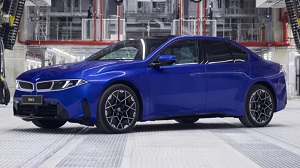
BMW Group has officially initiated series production of its fully electric sedan, the "BMW i3", at its iconic main plant in Munich, Germany.
Marking a historical transition for the Bavarian automaker, the new i3 represents the first model from the next-generation "Neue Klasse" series to enter commercial assembly lines on German soil, ahead of global market deliveries scheduled for the third quarter of 2026.
This milestone follows a comprehensive 4-year modernization program at the Munich facility.
Crucially, the engineering transformation was executed while maintaining uninterrupted daily output, allowing the plant to continue producing conventional 3 Series and 4 Series models alongside the installation of new electric vehicle production infrastructure.
A New Era Integrating Heritage and Future Mobility
Milan Nedeljković and Raymond Wittmann, Board Members responsible for Production, characterized the start of i3 production as the inauguration of a new operational era for the Munich plant.
Wittmann highlighted that the new model connects the core identity of the BMW brand—represented by the 3 Series legacy—with its most historical manufacturing site in Munich.
The company emphasized that integrating headquarters, research and development centers, and advanced manufacturing in Munich creates a centralized knowledge hub.
The operational efficiencies and technical expertise gained from launching the Neue Klasse architecture in Munich will be rolled out across BMW’s global production network.
Cost Reduction and 100% EV Transition by 2027
Peter Weber, Plant Director at BMW Munich, confirmed that introducing the i3 on the Neue Klasse architecture reduces total manufacturing costs at the facility by 10%.
These financial gains stem from optimized vehicle design, targeted automation, streamlined logistics, and closer integration with component suppliers.
Weber reaffirmed that starting in 2027, BMW’s Munich parent plant will exclusively manufacture 100% electric vehicles, phasing out internal combustion engine assembly entirely.
Additional electric models under the Neue Klasse umbrella are scheduled to join the Munich production lines in the coming years.
Facility Expansion and Technical Specifications
To accommodate the Neue Klasse manufacturing requirements, BMW constructed state-of-the-art facilities occupying approximately one-third of the total Munich plant footprint.
The new infrastructure includes an advanced body shop, a digitized assembly line, integrated logistics zones, and a newly commissioned vehicle delivery hall for final quality inspections.
Production is set to scale up rapidly over the coming months to fulfill strong pre-order volume recorded since order books opened ahead of schedule in mid-June 2026.
The new BMW i3 incorporates 6th-generation (Gen6) e-drive technology and high-voltage cylindrical battery cells, supporting 400 kW DC fast charging capable of restoring 10% to 80% charge in 21 minutes, alongside a maximum driving range exceeding 700 kilometers onWLTP standards.
In conclusion, the start of series production for the electric BMW i3 in Munich underscores BMW Group’s commitment to leading the premium electric vehicle transition.
By successfully modernizing one-third of its historic flagship plant, reducing assembly costs by 10%, and committing to an all-electric production lineup by 2027, BMW positions the Neue Klasse architecture as the cornerstone of its future competitiveness in global automotive markets.