Disadvantages of Electric Cars You Should Know Before Buying: 12 Factors That Could Influence Your Decision
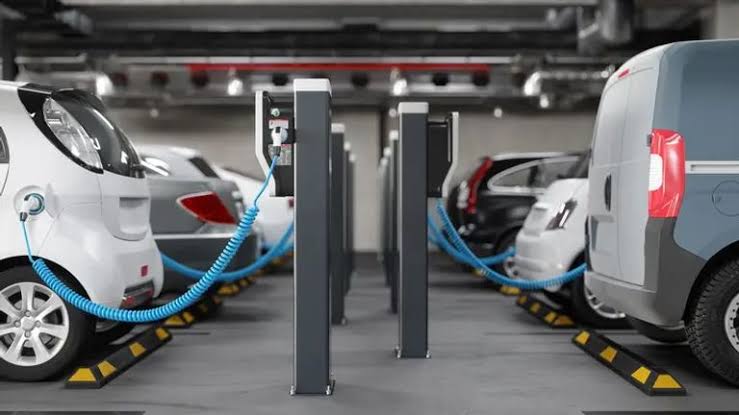
Electric vehicles in Egypt face several challenges that could influence consumers' purchasing decisions during 2026, despite the advantages they offer in terms of lower energy consumption and reduced maintenance expenses compared with conventional gasoline-powered vehicles. These challenges raise questions about their suitability for everyday use and long-distance journeys, as well as the actual cost of ownership over several years.
These challenges range from high purchase prices for certain models and limited charging station availability in some areas to longer battery charging times, concerns about repair costs, resale value, spare parts availability, and access to authorized service centers.
A study published by the Organisation for Economic Co-operation and Development on Egypt indicates that consumer affordability and inadequate charging infrastructure represent major barriers to electric vehicle adoption. Other studies emphasize the importance of developing maintenance services and improving consumer awareness of electric vehicle ownership.
These challenges do not mean that electric vehicles are less efficient than conventional cars. However, they demonstrate that purchasing decisions require a comprehensive assessment of vehicle prices, usage patterns, charging availability, warranties, and long-term operating costs.
High Purchase Prices Compared With Some Gasoline-Powered Vehicles
Purchase price is one of the main factors that may limit electric vehicle adoption, particularly among consumers working within a fixed budget when choosing a new car.
Despite the introduction of affordable electric models into the Egyptian market, certain vehicles are still sold at higher prices than comparable gasoline-powered cars in terms of size or equipment.
Part of the cost of electric vehicles is associated with their batteries, which are among the main components of the powertrain, alongside the technologies used for energy management and charging.
Price differences vary depending on the brand, battery capacity, equipment, and country of origin. Therefore, it cannot be assumed that all electric vehicles are more expensive than gasoline-powered alternatives.
The importance of purchase price lies in its impact on total ownership costs, as consumers may need several years to recover any additional upfront expense through savings on electricity and maintenance.
For example, if an electric vehicle costs EGP 200,000 more than a comparable gasoline-powered car and generates annual operating savings of EGP 20,000, recovering the price difference would theoretically require ten years, excluding changes in prices, financing costs, and resale value.
This calculation demonstrates that lower operating costs alone are insufficient to determine economic feasibility. The purchase price must also be compared with expected savings throughout the ownership period.
Limited Charging Stations in Certain Areas
The availability of charging stations represents one of the main challenges facing electric vehicle use in Egypt, particularly outside major urban areas.
Specialized reports indicate that charging infrastructure has expanded in recent years, but geographical differences in station distribution and available services remain.
Consequently, electric vehicle owners may find several charging options in certain locations while experiencing greater difficulty locating a suitable station when traveling elsewhere.
The challenge is not limited to the number of stations. Their operational capacity, connector compatibility, and service availability upon arrival must also be considered.
Drivers may need to modify their routes or wait for a compatible charger to become available, adding time and indirect costs to vehicle use.
These challenges are particularly important for consumers who regularly travel between governorates or depend on their vehicles for long-distance work.
Longer Charging Times Compared With Refueling
Electric vehicles differ from conventional cars in the time required to replenish their energy supply. Gasoline-powered vehicles can be refueled within minutes, while electric vehicle batteries generally require longer charging periods.
Charging duration depends on battery capacity, charger power, the maximum charging power accepted by the vehicle, battery charge level, and battery temperature.
Slow and medium-speed charging stations use alternating current (AC), while fast charging stations rely on direct current (DC).
Some vehicles may require several hours when using home charging, while compatible fast charging stations can restore a substantial percentage of battery capacity in a shorter period.
However, using a high-power charger does not mean that the battery will receive electricity at maximum power throughout the charging process, as charging speeds generally decrease when the battery approaches a higher state of charge.
Charging duration becomes an important purchasing consideration for drivers who cannot leave their vehicles connected to chargers for extended periods.
Reduced Driving Range Under Certain Conditions
Driving range per charge is one of the most important criteria consumers consider when comparing electric vehicles.
Manufacturers announce driving ranges according to standardized tests such as WLTP, EPA, and CLTC, but actual results may differ depending on operating conditions.
High speeds, aerodynamic resistance, repeated acceleration, and air conditioning use increase energy consumption, potentially reducing the distance a vehicle can travel before requiring another charge.
These factors are particularly relevant in Egypt during the summer months, especially when temperatures rise and air conditioning is used for extended periods.
For example, if a vehicle has a theoretical driving range of 400 kilometers and its energy efficiency declines sufficiently to reduce that range by 20%, the available distance would fall to approximately 320 kilometers.
This is an illustrative calculation rather than a fixed percentage reduction applicable to all electric vehicles.
Consumers should therefore review real-world driving tests and ensure that a vehicle's range meets their regular transportation requirements.
Battery Repair and Replacement Costs
The battery is one of the most important components to consider when purchasing an electric vehicle because of its direct impact on performance, driving range, and market value.
Manufacturers provide different battery warranties, which may be linked to a specified number of years or kilometers, depending on each brand's conditions.
Over time, batteries experience gradual reductions in available capacity. This is a normal process, although the rate varies according to battery chemistry, temperature, and charging patterns.
Reduced capacity does not necessarily require replacing the entire battery, as the vehicle may continue operating normally despite a gradual decline in driving range.
However, major failures or damage resulting from certain accidents may require specialized repairs, which can be expensive outside warranty coverage.
Battery repair or replacement costs vary considerably depending on the model, battery capacity, and availability of components and technical services.
Consumers should therefore review warranty conditions and confirm that authorized service centers can inspect and repair the battery when necessary.
Battery Performance in High Temperatures
Temperature affects the performance and efficiency of electric vehicle batteries, particularly when vehicles operate in extremely hot conditions.
Modern electric vehicles are equipped with battery thermal management systems designed to maintain performance within appropriate operating limits.
However, cooling systems may consume some of the energy stored in the battery, while repeated exposure to high temperatures can contribute to accelerated degradation in certain battery types over the long term.
This issue is particularly relevant to the Egyptian market, where temperatures rise considerably during summer in several governorates.
The impact of heat varies between vehicles depending on the cooling system design, battery chemistry, and thermal management efficiency.
This does not mean electric vehicles are unsuitable for Egypt's climate. Rather, it highlights the importance of selecting a vehicle equipped with an effective battery thermal management system and following the manufacturer's recommendations.
Difficulties Installing Home Chargers
Access to a suitable home charging location is one of the factors determining how convenient electric vehicle ownership will be.
Consumers with private garages or designated parking spaces can consider installing suitable chargers after verifying electrical safety and the necessary installation requirements.
Residents of apartment buildings without private parking facilities, however, may face difficulties securing a charging location or obtaining the approvals required to install equipment.
Some locations may require electrical modifications or additional protective equipment, increasing the cost of preparing a charging space.
This challenge becomes more significant when the vehicle is used daily, as owners become increasingly dependent on public charging stations.
Consumers should therefore verify whether home charging is possible before purchasing an electric vehicle rather than discovering installation difficulties after completing the purchase.
Maintenance and Spare Parts Challenges
Although electric vehicles do not require engine oil changes or maintenance of certain components associated with internal combustion engines, they still require specialized technical services.
These vehicles contain high-voltage electrical systems and electronic energy management units, requiring appropriate equipment and trained technicians for certain repairs.
Spare parts availability may vary between brands operating in the Egyptian market, particularly for newly introduced models or vehicles imported outside official dealership channels.
Limited access to specialized service centers may also increase repair times in some cases.
These challenges do not necessarily mean that electric vehicles are more prone to mechanical failures. However, they emphasize the importance of verifying the availability of authorized maintenance networks and spare parts before purchasing.
Consumers should also review regular maintenance prices, warranty conditions, and the services provided by local dealers.
Uncertain Resale Values for Certain Models
Resale value is an important element in calculating total vehicle ownership costs, particularly for consumers who replace their cars after several years.
Some electric vehicles face challenges in estimating their future market values because of rapid technological developments and changes in new vehicle prices.
Battery condition, remaining driving range, and available warranty coverage also influence the valuation of used electric vehicles.
International reports indicate that some electric vehicle markets have experienced noticeable declines in resale values compared with conventional vehicles. However, these findings cannot be directly generalized to all models in Egypt.
Resale values differ according to brand, demand, spare parts availability, and the vehicle's technical condition.
Consumers should therefore examine used electric vehicle prices in the local market before purchasing and avoid assuming that a vehicle will retain a fixed percentage of its value after several years.
Different Charging Standards and Connectors
Electric vehicles use different charging connector types, making compatibility with available stations an essential consideration before purchasing.
Some of the most prominent international standards include CCS, Type 2, and GB/T, with applications varying across markets and vehicle models.
Vehicle owners may encounter difficulties using certain charging stations if their charging ports are incompatible with the available connectors.
This issue becomes particularly important when purchasing vehicles imported with specifications intended for different markets, especially if they do not support charging standards commonly used locally.
It should not be assumed that connector adapters can resolve all compatibility problems, as charging also depends on communication protocols and safety requirements.
Consumers should therefore confirm the charging standards supported by their vehicles and their compatibility with local charging networks before completing a purchase.
Insurance and Accident Repair Costs
Insurance costs for electric vehicles may differ from those of conventional cars because of variations in purchase prices, spare parts costs, and repair expenses.
Some electric vehicles contain expensive components, including batteries, high-voltage systems, and electronic control units.
Accidents affecting these components may require specialized technical inspections to ensure the vehicle is safe before returning it to service.
Insurance coverage conditions also vary between providers, particularly regarding battery damage, electrical failures, and accidents.
There is no uniform insurance cost for all electric vehicles in Egypt, as premiums depend on vehicle value, model, driver history, and policy conditions.
Consumers should therefore obtain an actual insurance quotation before purchasing and review exclusions relating to batteries and charging systems.
Dependence on Applications and Software Updates
Modern electric vehicles rely heavily on electronic systems and software to manage batteries, charging, and certain driving functions.
These systems offer various benefits, including monitoring charging status, remotely controlling selected functions, and receiving software updates.
However, this dependence may introduce challenges related to technical support, update availability, and the continued operation of applications and connectivity services.
Available functions may vary depending on the market for which the vehicle was manufactured, particularly for imported models with specifications not intended for Egypt.
Consumers should also verify whether official applications can be used and whether software updates are available through authorized dealers or service centers.
This issue becomes increasingly important for owners who rely on electronic functions to monitor charging or control their vehicles daily.
How Should You Make an Electric Vehicle Purchasing Decision?
Purchasing an electric vehicle requires evaluating several factors related to individual driving conditions rather than focusing exclusively on the lower cost of electricity compared with gasoline.
The comparison begins by identifying the distances consumers travel daily and annually, along with the availability of home chargers or nearby public charging stations.
The price of an electric vehicle should also be compared with that of a similar gasoline-powered car, taking into account energy, maintenance, and insurance expenses throughout the expected ownership period.
Other important considerations include actual driving range, charging speed, battery warranty conditions, spare parts availability, and access to authorized maintenance centers.
When purchasing a used electric vehicle, a specialized battery health inspection is recommended, alongside reviewing maintenance records, accident history, and remaining warranty coverage.
An electric vehicle may be more suitable for consumers who travel regular daily distances and have access to low-cost charging. Other drivers may prefer gasoline-powered or hybrid vehicles if they frequently travel long distances without reliable charging infrastructure.
Electric Vehicle Disadvantages Do Not Eliminate Their Economic Benefits
The challenges associated with electric vehicles in Egypt during 2026 demonstrate the importance of distinguishing between lower operating expenses, ease of use, and total ownership costs.
While electric vehicles offer opportunities to reduce energy expenses and eliminate certain conventional maintenance requirements, higher purchase prices for some models, limited charging availability in certain areas, and battery repair costs may affect their economic feasibility.
Resale value, spare parts availability, and charging station compatibility also remain important factors that should be examined before making a purchasing decision.
As charging infrastructure continues to expand and the variety of available models increases, some of these challenges may gradually diminish. However, their impact will continue to vary according to each consumer's circumstances.
Ultimately, the best choice is not determined simply by whether a vehicle is electric or gasoline-powered, but by how well its cost, specifications, and available services match the buyer's requirements and ability to operate and maintain it over the long term.