Electric Car Prices in Egypt 2026: A Comparison of Leading Models
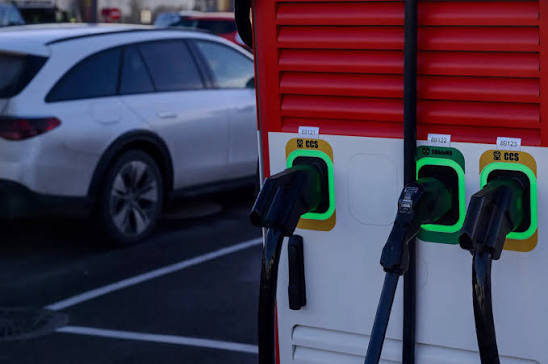
Egypt's electric vehicle market witnessed a noticeable expansion in the number of models and price categories available to consumers during 2026, driven by the entry of new automotive brands and the growing variety of models offered by companies operating in the sector. This development has provided buyers with multiple options, ranging from small vehicles designed for urban transportation to sport utility vehicles and high-priced luxury models.
The latest price lists published in October 2026 revealed an increasingly competitive electric vehicle market, with some models now available for less than EGP 1 million, while others exceed EGP 3 million. Prices in the luxury segment can surpass EGP 10 million, reflecting the different consumer categories targeted by automotive manufacturers.
Comparisons between electric vehicles are no longer based solely on price. Battery capacity, driving range per charge, charging speed, technological features, and after-sales services have become among the most important factors influencing purchasing decisions, particularly given the differences in technical specifications among models available in the Egyptian market.
Budget Electric Vehicles: Competition Starts at EGP 770,000
Budget electric vehicles lead the list of options targeting consumers seeking more affordable alternatives to mid-range and luxury electric models, particularly with several vehicles now available for less than EGP 1 million.
The 2026 Dongfeng BOX is among the most prominent vehicles offered in this category, with prices starting at EGP 770,000 for the BOX 330 version and rising to EGP 870,000 for the BOX 430.
The two versions differ in their advertised driving ranges and certain specifications and features, allowing consumers to choose between a lower purchase price and a longer driving range.
The vehicle primarily targets everyday urban transportation, including commuting to work and making short- and medium-distance journeys, which represent some of the main uses of compact electric vehicles.
Within the same price category, the 2027 Geely EX2 is available from EGP 789,900 for the Pro version, while the Max version is priced at approximately EGP 899,900, according to the latest published price lists in the local market.
The vehicle uses an electric powertrain and offers a compact design suitable for urban environments, with different equipment levels available across its two versions.
Competition between the Dongfeng BOX and Geely EX2 reflects the close pricing of budget electric vehicles. The difference between their starting prices stands at approximately EGP 19,900, making technical specifications, warranty coverage, and maintenance services important factors when comparing the two models.
Arcfox and BYD Compete Below EGP 1 Million
The list of electric vehicles priced below EGP 1 million also includes the 2026 Arcfox T1, which starts at approximately EGP 924,900 for the Pro version.
The vehicle provides an additional option for consumers interested in purchasing an electric car within the budget segment, allowing buyers to compare different versions based on equipment, driving range, and battery capacity.
The 2027 BYD Dolphin Surf is also available, with prices starting at EGP 949,900, placing it within the same competitive price category.
The vehicle is equipped with a battery capacity of approximately 38.88 kWh and a 75-horsepower electric motor, offering an advertised driving range of around 300 kilometers under the WLTP testing standard.
The vehicle supports both home charging and fast charging, allowing owners to use different charging methods depending on their driving requirements and the infrastructure available.
These models demonstrate the growing competition below the EGP 1 million threshold, as the market now includes several alternatives with different designs, equipment levels, and technical specifications, rather than offering only a limited selection of expensive electric vehicles.
Chevrolet Spark EV Priced at EGP 950,000
The 2026 Chevrolet Spark EV enters the competition with a starting price of EGP 950,000 for the ACTIV version, placing it close to the price level of the BYD Dolphin Surf.
The vehicle targets consumers looking for a compact electric car for everyday transportation, focusing on convenient urban mobility and the benefits of electric motors that do not require gasoline.
Published specifications indicate that the vehicle offers an advertised driving range of approximately 360 kilometers under the NEDC testing cycle, compared with around 298 kilometers under the WLTP standard. This difference results from the testing methods used to calculate energy consumption and driving range.
The variation highlights the importance of examining the testing standard when comparing electric vehicles, as higher advertised figures do not necessarily indicate that one vehicle will outperform another under actual driving conditions.
Mid-Range Electric Vehicles: Prices Start at EGP 1.2 Million
Competition moves into a higher price category with mid-range electric vehicles, which offer a variety of options in terms of performance, equipment, and interior space.
The 2026 MG4 is among the most prominent vehicles in this segment, with prices starting at EGP 1.2 million for the Standard version and rising to EGP 1.4 million for the Luxury version.
The entry-level version is equipped with a 51 kWh battery and an electric motor producing approximately 168 horsepower, with torque reaching 250 Nm and an advertised driving range of around 350 kilometers.
These specifications place the vehicle in a different position from several smaller budget models, particularly for consumers who prioritize engine power and vehicle size when making purchasing decisions.
The 2026 Arcfox Kaola S is also available, with prices starting at EGP 1,174,900, positioning it within the mid-range segment, while prices for the 2026 GAC Aion LX start at EGP 1.3 million.
This category also includes the 2027 BYD Atto 2, starting at EGP 1,379,900, alongside the 2026 Chevrolet Captiva EV, with prices beginning at EGP 1,399,000.
The diversity of these models reflects manufacturers' efforts to introduce electric vehicles in different sizes, allowing consumers to choose between compact cars and sport utility vehicles.
Kia EV3 Competes with Prices Starting at EGP 1.4 Million
The 2026 Kia EV3 is among the leading electric vehicles competing in the mid-range category, with prices starting at EGP 1.4 million for the Air version.
The price increases to EGP 1.8 million for the Earth version, while the GT-Line reaches EGP 2.05 million, according to price lists published during October.
The vehicle belongs to the compact sport utility vehicle category and offers different battery and equipment options. The entry-level version uses a Standard Range configuration, while higher versions are available with a Long Range configuration.
This difference means that comparisons between the vehicle's versions should not be limited to interior or exterior equipment. They should also include battery capacity and driving range, as these are essential factors in determining the value consumers receive for the price.
The Kia EV3 faces competition from several electric models within the same price category, particularly as Chinese manufacturers continue expanding their offerings of vehicles equipped with various technological features.
Higher-Priced Electric Vehicles: Competition Exceeds EGP 2 Million
Higher-priced categories include several automotive brands targeting consumers seeking greater levels of performance, equipment, and comfort.
Prices for the 2026 Kia EV5 start at EGP 2.05 million for the Air version, increasing to EGP 2.3 million for the Earth version and reaching EGP 2.55 million for the GT-Line.
The 2026 Kia EV6 is also available, with prices starting at EGP 2.3 million, while the GT version reaches EGP 3 million.
The price differences between these models reflect variations in vehicle characteristics and target consumer groups, as well as differences in powertrain systems, equipment, and technical specifications.
Within the same segment, the Hyundai Ioniq 6 is available with prices starting at approximately EGP 2.15 million, while prices for the Ioniq 5 begin at around EGP 2.2 million, according to published price lists.
These options allow consumers to compare electric sedans with sport utility vehicles, taking into account differences in design, interior space, and equipment.
Luxury Electric Vehicles: Prices Exceed EGP 10 Million
Competition in the Egyptian market also extends to luxury electric vehicles, which target a different consumer segment and place greater emphasis on performance, advanced technology, and expensive equipment.
This category includes the 2026 Mercedes-Benz EQA250+, with prices starting at EGP 3.4 million, and the Mercedes-Benz EQB250+, starting at EGP 3.42 million.
The 2026 BMW iX1 is also available at approximately EGP 3.8 million for the eDrive20 M Sport version, while the BMW i4 is priced at around EGP 5.1 million.
The list also includes the BMW i5, priced at approximately EGP 6.25 million, while the 2026 BMW i7 reaches around EGP 11 million.
The Cadillac Escalade IQ is among the highest-priced electric vehicles in the market, costing approximately EGP 10,949,900, while the Escalade IQL reaches around EGP 12,249,900.
These prices illustrate the substantial gap between budget and luxury electric vehicles, reflecting differences in equipment levels, performance, and targeted consumer categories.
Battery Capacity and Driving Range: Key Purchasing Factors
Despite the importance of price in selecting a suitable vehicle, battery capacity and driving range remain two essential elements when comparing electric models.
Battery capacity, measured in kilowatt-hours, determines the amount of energy that can be stored in a vehicle, while driving range refers to the distance the vehicle can travel before requiring another charge.
However, the distance a vehicle can cover does not depend solely on battery capacity. It is also influenced by motor efficiency, vehicle weight, road conditions, driving speed, and the use of air conditioning.
The standards used to measure driving range also vary, including WLTP, NEDC, and CLTC, making it necessary to consider the testing cycle when comparing figures advertised by manufacturers.
Actual driving range may fall below official figures because of high temperatures, driving at elevated speeds, or using air conditioning for extended periods.
Consequently, choosing the vehicle with the longest advertised range does not necessarily represent the best purchasing decision unless that range matches everyday driving requirements and the availability of charging facilities.
Charging and Maintenance Services: Challenges Facing Electric Vehicle Adoption
The availability of charging infrastructure is one of the main factors influencing electric vehicle purchasing decisions in Egypt, particularly for consumers who rely on their vehicles for long-distance journeys or do not have access to a permanent home-charging location.
Electric vehicle models differ in their ability to accept fast charging, while the time required to recharge a battery varies depending on charging power, battery capacity, and the current state of charge.
The advertised power of a charging station does not necessarily mean that a vehicle will receive electricity at that rate throughout the charging process, as the battery management system controls the rate at which energy is accepted.
After-sales services are also important in determining the long-term cost of vehicle ownership, particularly regarding battery warranties, spare parts availability, and authorized maintenance centers.
Consumers should also compare charging expenses, insurance costs, regular maintenance requirements, and expected resale values rather than relying exclusively on the initial purchase price.
Competition Expected to Become More Diverse
The electric vehicle price landscape in Egypt during 2026 reveals a market covering widely different price categories, starting at EGP 770,000 for certain budget models and exceeding EGP 12 million for luxury vehicles.
These differences indicate that competition is no longer limited to a specific consumer category but has expanded to several segments with different requirements and purchasing capabilities.
As the number of available models increases, comparisons between manufacturers are shifting toward factors beyond advertised prices, including energy efficiency, driving range, charging speed, maintenance availability, and warranty coverage.
The development of demand for electric vehicles will remain linked to manufacturers' ability to offer competitive prices, alongside the expansion of charging services and the provision of technical support and after-sales services. These factors will determine the extent to which electric vehicles can increase their share of sales in the Egyptian automotive market during the coming period.