Is It Better to Buy a New or Used Car in 2026? Comparing Prices, Maintenance Costs and Resale Value
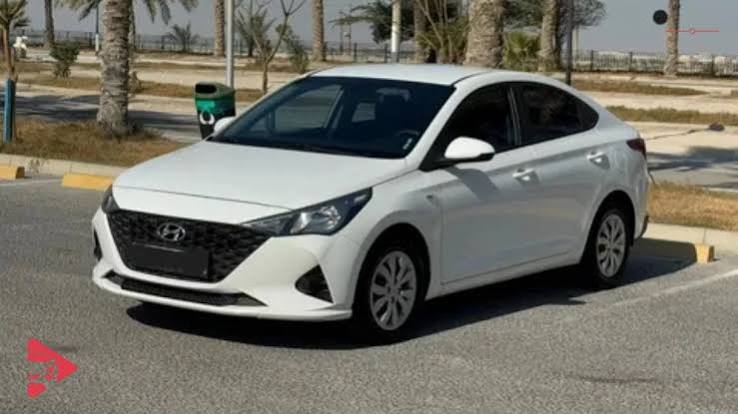
Consumers in Egypt are increasingly uncertain about whether to purchase a new or used car in 2026, particularly as vehicle prices change and price differences vary between recent models and older vehicles, alongside rising maintenance and spare parts costs.
New cars offer buyers advantages associated with dealership warranties, unused mechanical components and a lower likelihood of major repairs during the initial ownership period. Used cars, meanwhile, provide opportunities to purchase higher-equipped or larger vehicles within the same budget.
The more economical choice depends on purchase price, mechanical condition, maintenance and insurance costs, fuel consumption and resale value, as well as how long the buyer intends to keep the vehicle.
Market developments during October 2026 indicate continued competition between affordable new cars and relatively recent used vehicles, with pricing trends varying between the two segments. Some new models have experienced price increases, while high asking prices for certain used vehicles have raised questions about whether they represent better value than new alternatives.
New Car Prices in Egypt During 2026
New-car prices provide the starting point for determining whether purchasing a used vehicle offers genuine savings.
Price lists available during October 2026 show that the locally assembled 2027 Proton Saga, equipped with an automatic transmission, has an official price of approximately EGP 685,000.
Prices for the 2027 Nissan Sunny start at approximately EGP 765,000 for the entry-level automatic version, increase to around EGP 800,000 for the mid-range trim and reach EGP 835,000 for the highest-equipped version.
These prices demonstrate that buyers with budgets ranging from EGP 685,000 to EGP 835,000 can choose between several new sedans without necessarily turning to the used-car market.
However, official prices do not always reflect actual delivery prices, as differences may arise between dealership prices and those offered by distributors, depending on availability and demand.
Used Car Prices: Options Starting at EGP 430,000
Egypt's used-car market offers a wide range of options, with prices varying according to model year, mechanical condition, mileage and equipment levels.
According to a market report published in October 2026, certain used Chevrolet Optra vehicles from model years 2013 to 2021 are priced between approximately EGP 430,000 and EGP 500,000.
The indicative price of a 2018 automatic Renault Logan is approximately EGP 500,000, while used MG5 vehicles from model years 2021 to 2024 are priced between EGP 660,000 and EGP 750,000 in one published report.
Meanwhile, the average price of a 2016 Toyota Corolla is approximately EGP 690,000, compared with around EGP 960,000 for a 2019 model, according to the same market survey.
These prices demonstrate that buyers may be able to purchase a used vehicle from a higher segment or a different brand for the price of an economical new car. However, they do not necessarily indicate that every vehicle advertised at these prices is in good mechanical condition.
Indicative prices may also differ from advertised asking prices or the final amounts agreed upon in actual transactions.
Practical Comparison: A New Car at EGP 685,000 or a Used Car at the Same Price?
The differences between the two options can be illustrated using a budget of approximately EGP 685,000.
This budget allows buyers to purchase a new 2027 Proton Saga at its published official price, with a warranty of up to five years or 150,000 kilometers, whichever comes first, according to available model information.
Alternatively, buyers can consider a used MG5 from model years 2021 to 2024 or a 2016 Toyota Corolla within published price ranges close to the same budget.
The new car offers the advantage of beginning ownership without a previous usage history, along with access to the manufacturer's warranty under its applicable terms.
A used car may offer different equipment, more interior space or driving characteristics preferred by the buyer, but it requires an independent technical inspection and a review of maintenance and accident history.
Neither vehicle can be considered superior simply because the prices are similar. Buyers should compare trim levels, equipment, safety systems, mechanical condition and expected operating costs.
Warranty: One of the Main Advantages of Buying New
Dealership warranty coverage is one of the main factors encouraging some consumers to choose new vehicles.
A warranty helps reduce exposure to certain repair expenses resulting from manufacturing defects during the specified period or mileage, subject to the manufacturer's terms and exclusions.
A new vehicle also allows the owner to know its entire usage history from the beginning and follow the recommended maintenance schedule without having to verify work carried out by a previous owner.
However, warranty coverage does not mean that all vehicle expenses will be free. Routine maintenance, consumable components and certain excluded repairs remain subject to the manufacturer's conditions.
A relatively recent used vehicle may still have some of its original warranty coverage remaining, provided the warranty terms allow coverage to continue after ownership transfer.
Buyers should therefore review warranty documents and maintenance records before purchasing a used vehicle advertised as still being under warranty.
Maintenance Costs: Are Used Cars More Expensive?
New cars generally require fewer major repairs during the initial years of ownership, provided they are maintained and operated appropriately.
A used vehicle, meanwhile, may require replacement of consumable components such as tires, batteries, brakes and belts, or maintenance of components neglected by its previous owner.
However, higher maintenance costs are not inevitable for every used car. A well-maintained used vehicle may cost less to maintain than a new model with expensive spare parts or service requirements.
Actual expenses depend on the vehicle's model, age, mileage, engine and transmission condition, and spare parts availability.
Before purchasing, buyers should obtain the new vehicle's scheduled maintenance plan and compare it with a technical inspection report and estimated repair costs for the used alternative.
This comparison helps establish the real difference between ownership costs rather than relying exclusively on purchase price.
Depreciation and Resale Value: Which Holds Its Value Better?
Vehicles generally lose value as they age and accumulate mileage, although depreciation rates vary between models and markets.
Under normal market conditions, the first owner bears a significant portion of the depreciation associated with a vehicle transitioning from new to used.
From this perspective, a used car that has already experienced part of its depreciation may be suitable for buyers planning to resell after a relatively short period.
However, Egypt's automotive market is also affected by changes in new-car prices, import costs, exchange rates and vehicle supply, which may cause the nominal prices of some used cars to rise despite their age.
It is therefore incorrect to assume that every new car loses a fixed percentage of its value annually or that a used vehicle will necessarily retain its purchase price.
Buyers should compare resale prices for the same model across different model years, considering mechanical condition, market demand and maintenance costs.
Fuel Consumption: Are New Cars More Economical?
Some new vehicles may offer better fuel efficiency because of improvements in engines, transmissions and energy management technologies.
However, a newer model year does not guarantee lower fuel consumption in every case.
A small used vehicle with an economical engine may consume less fuel than a larger or heavier new vehicle.
An accurate comparison depends on each model's actual fuel consumption, driving conditions in cities and on highways, and the buyer's annual mileage.
For example, if one vehicle consumes 6 liters per 100 kilometers and another consumes 8 liters, the difference amounts to 400 liters over 20,000 kilometers annually.
Assuming an illustrative fuel price of EGP 22 per liter, the difference in annual fuel expenses would be approximately EGP 8,800.
This is a hypothetical calculation intended to demonstrate the effect of fuel consumption. It is not a comparison between specific models or a confirmation of the current gasoline price.
Safety and Equipment: Comparing Trim Levels Matters More Than Model Year
Buying a new vehicle does not necessarily mean obtaining more safety equipment than a used one.
A used vehicle from a higher segment may include electronic stability control, additional airbags and driver-assistance features unavailable in the entry-level version of an economical new car.
Conversely, a new vehicle may offer more advanced systems, improved design or upgraded safety equipment compared with older models.
Buyers should therefore review the specifications of the exact trim level rather than relying solely on the vehicle's name or model year.
Important factors include the number of airbags, braking systems, electronic stability control and crash-test results, where available for the relevant vehicle specification.
Safety systems in used vehicles should also be checked, particularly if the car has previously been involved in an accident or undergone structural repairs.
Risks of Buying a Used Car Without Inspection
Uncertainty about a used vehicle's mechanical history is one of the main risks facing buyers.
Potential problems include engine and transmission defects, previous repairs to the chassis or body structure, odometer manipulation and neglected maintenance.
These risks increase when buyers rely solely on the seller's description without obtaining an independent inspection.
The engine, transmission, suspension, brakes, electrical systems and body structure should all be examined, alongside maintenance history and ownership documents.
Buyers should also verify that chassis and engine numbers match official records and that no restrictions prevent legal ownership transfer.
Obtaining a written report identifying existing faults and estimated repair costs is advisable before agreeing on the final price.
Does Financing Make Buying a New Car Better?
Some financing providers offer installment programs for both new and used vehicles, although financing costs vary according to interest rates, loan duration, down payments, administrative fees and insurance requirements.
A new vehicle may appear easier to purchase if an attractive financing program is available. However, lower monthly installments do not necessarily mean a lower total cost.
Used vehicles may require larger down payments or be subject to different financing conditions related to model year and vehicle age.
Buyers should therefore calculate the total amount payable over the financing period rather than comparing monthly installments alone.
Additional expenses, including registration, insurance and maintenance, should also be considered when establishing the maximum budget.
When Is a New Car the Better Choice?
A new vehicle is generally preferable when buyers want clear warranty coverage and a known usage history while seeking to reduce the likelihood of unexpected repairs during the first years of ownership.
It may also be suitable for consumers planning to keep their vehicle for many years, particularly if it meets their requirements for space, safety and equipment.
A new vehicle becomes especially attractive when the price difference compared with a similar used car is relatively small, as buyers receive an unused vehicle and warranty coverage beginning from the purchase date.
However, actual delivery prices, maintenance costs and warranty conditions should be verified before making a decision.
When Is a Used Car the Better Choice?
A used vehicle may offer better value when the available budget allows buyers to purchase a larger or better-equipped model at a substantially lower price than a comparable new vehicle.
It may also suit buyers with experience evaluating cars or those who can arrange an inspection at a trusted specialist center.
The value proposition improves when maintenance history is documented, mechanical condition is good and the vehicle is unlikely to require major repairs in the near future.
However, buyers should retain a financial reserve for possible maintenance and repairs after purchase rather than spending their entire budget on the vehicle itself.
A low purchase price should not be considered an advantage if the vehicle has serious safety problems or requires repairs that eliminate the initial savings.
How to Calculate the Real Cost Over Five Years
Buyers can compare new and used vehicles by calculating total ownership costs over a hypothetical five-year period.
These costs include purchase price, financing expenses, insurance, registration, fuel, maintenance and repairs, minus the expected resale value at the end of the period.
For illustration, if a new vehicle costs EGP 800,000 and a used vehicle costs EGP 600,000, the initial purchase price difference is EGP 200,000.
If the used vehicle requires EGP 80,000 more in maintenance and repairs over five years than the new vehicle, the initial savings fall to EGP 120,000 before accounting for differences in insurance, fuel, financing and resale value.
If the new vehicle's resale value is substantially higher, the used vehicle's final savings may decline further.
This hypothetical calculation demonstrates that a lower purchase price does not necessarily mean lower ownership costs and that comparisons should include all expenses and expected resale proceeds.
New or Used: Which Is the Better Decision in 2026?
The comparison between new and used vehicles in Egypt during 2026 demonstrates that each option offers different advantages.
A new car provides warranty coverage, unused mechanical components and more predictable expenses during the initial ownership period, while a used vehicle allows buyers to consider a wider range of models within the same budget.
However, the high asking prices of certain used vehicles and their proximity to the prices of economical new models make direct comparisons essential.
A new vehicle becomes more attractive when the price difference is limited, while a used vehicle may offer better value if its price is competitive and its mechanical and legal condition is properly documented.
Ultimately, the better decision depends on budget, intended use, ownership duration and total cost of ownership rather than whether the vehicle is new or used.