Li 6 Leads Li Auto European Expansion
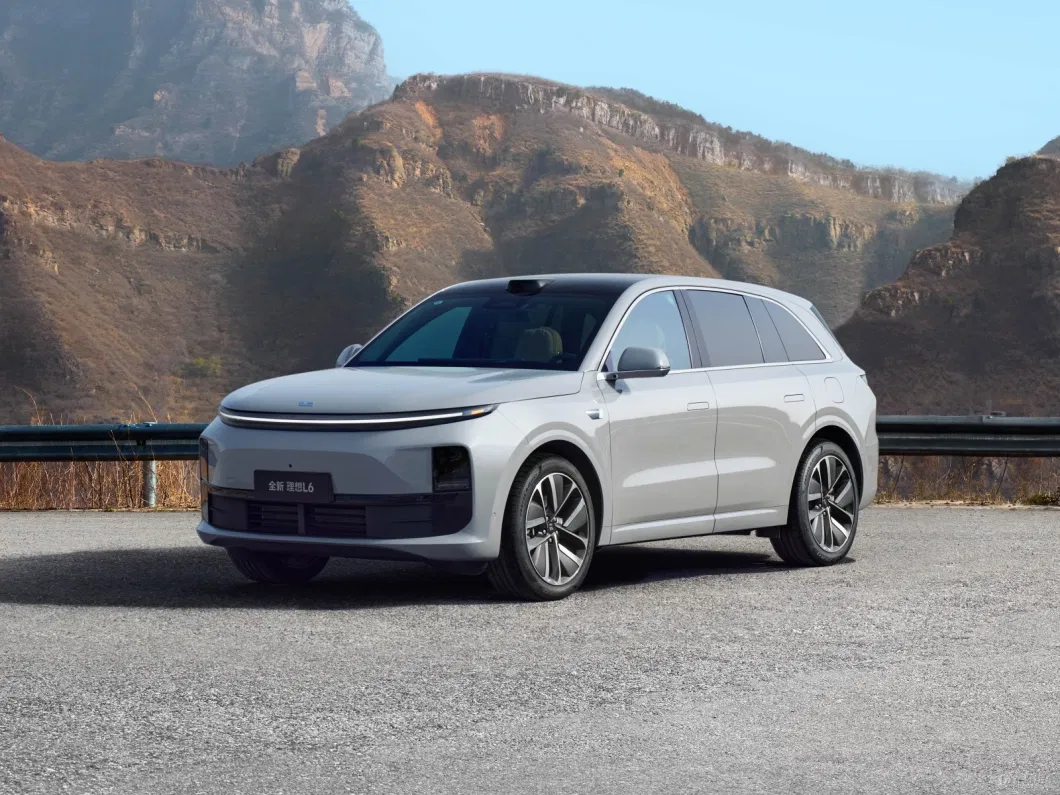
The Chinese electric vehicle industry is reaching a pivotal moment in its global expansion, with Li Auto officially announcing its strategic entry into the European market.
The cornerstone of this expansion is the all-electric SUV, rebranded specifically for Europe as the "Li 6" instead of its domestic Chinese designation, "i6".
This name change is far more than a marketing exercise; it serves as a structural solution to separate pure battery electric vehicles (BEVs) from the brand's range-extended electric vehicle (EREV) models.
Nomenclature Strategy and Powertrain Differentiation
In its home market, Li Auto built its dominance on EREVs—electric vehicles equipped with small internal combustion engines that act purely as generators to extend battery range.
However, Europe’s strict regulatory landscape and strong policy push toward zero direct emissions required a tailored export strategy.
Adopting the "Li 6" badge for Europe isolates this pure electric SUV from the existing L6 EREV lineup. This deliberate naming structure prevents confusion among European buyers who prioritize zero-emission mobility.
While Li Auto dedicates its pure BEVs to European customers to align with local environmental mandates, it continues to focus its EREV offerings on regions like the Middle East and Central Asia, where long-distance driving needs and developing charging infrastructures make range extenders a practical alternative.
Operational Infrastructure and German R&D Center
Li Auto’s entry strategy extends beyond product announcements into building tangible credibility within the European automotive ecosystem.
The company initiated its presence by serving as an official mobility partner for a major golf tournament in the Netherlands, deploying a fleet of vehicles to manage VIP transportation.
This deployment provided a real-world showcase of the vehicle's luxury and comfort under demanding operational conditions.
Simultaneously, the automaker established a specialized Research and Development center in Munich, Germany. This facility focuses on recalibrating advanced driver-assistance systems (ADAS) and cybersecurity architectures to strictly comply with European Union regulations (UNECE directives).
Furthermore, localized engineering teams are tuning chassis dynamics and steering feel to meet European driving expectations on high-speed highways and mixed terrain.
800V Architecture and Charging Capabilities
Occupying the mid-to-large luxury SUV segment, the Li 6 is engineered around the brand’s newest dedicated EV architecture. The vehicle features precise exterior proportions: an overall length of 4,950 mm, a width of 1,960 mm, and a height of 1,735 mm. Utilizing a dedicated electric platform allows for a generous 3,000 mm wheelbase, yielding maximized cabin space and exceptional rear legroom.
Energy storage is provided by an 87.3 kWh lithium battery pack developed in partnership with a leading global battery manufacturer. The powertrain integrates an 800V high-voltage electrical system capable of supporting 5C ultra-fast charging rates. Under optimal conditions, this system can replenish up to 500 km of driving range in just 10 minutes.
Under the Chinese CLTC testing cycle, the SUV achieves an estimated maximum range of 720 km. When converted to the stricter European WLTP standard, realistic driving range figures are anticipated between 550 km and 580 km.
Drivetrain configurations include a single-motor rear-wheel-drive setup producing 250 kW (approximately 335 hp), as well as a dual-motor all-wheel-drive variant delivering a combined output of 400 kW (approximately 536 hp).
European Market Launch and Industry Outlook
Li Auto will stage the public European debut of the Li 6 at the Paris Motor Show, with customer deliveries scheduled to begin across European markets in the fourth quarter of 2026.
While the vehicle presents competitive technical specifications, its commercial trajectory will navigate several market complexities. Chief among these are the EU tariffs on Chinese-built electric vehicles, which directly impact pricing positioning against domestic European competitors.
Additionally, fully exploiting the 5C fast-charging capability remains dependent on the ongoing expansion of high-capacity charging infrastructure across European highways.
Nevertheless, the combination of spatial efficiency, rapid charging engineering, and localized software development positions the Li 6 as a notable contender in the evolving premium EV landscape.