Sedan or SUV? Comparing Prices, Fuel Consumption and Maintenance Costs in Egypt in 2026
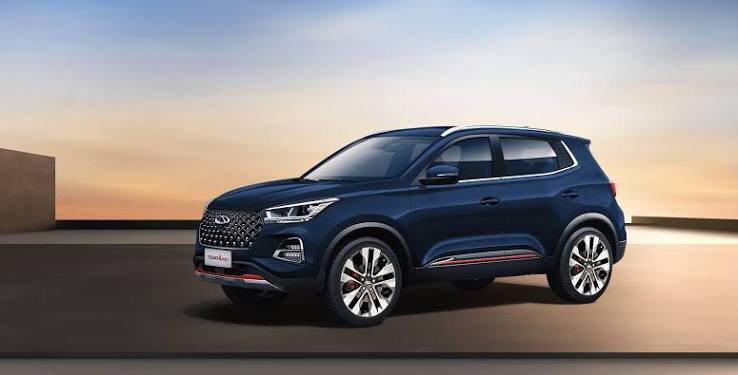
Consumers in Egypt face a choice between purchasing a conventional sedan and a sport utility vehicle (SUV) in 2026, as the range of available models expands and manufacturers increasingly compete to offer affordable vehicles suitable for daily and family use.
Sedans and SUVs differ in design, ground clearance, interior space, weight and fuel consumption. These factors affect purchase prices, operating expenses and maintenance costs.
Despite growing interest in crossovers and SUVs, sedans continue to offer suitable options for consumers who prioritize fuel economy, ease of driving and total ownership costs.
However, not all SUVs are more expensive to operate than sedans. Compact crossovers have entered the market at prices competitive with certain sedans, while improvements in engine technology have made some crossover models more fuel-efficient.
Sedan and SUV Prices in Egypt: How Much Is the Purchase Price Difference?
The comparison begins with purchase price, one of the largest components of total vehicle ownership costs.
Price lists circulating in October 2026 show affordable automatic sedans such as the Proton Saga, with a published starting price of approximately EGP 685,000, and the 2027 Nissan Sunny, whose entry-level automatic version starts at approximately EGP 765,000.
Meanwhile, compact crossovers include the Nissan Magnite, with October pricing updates indicating a starting price of approximately EGP 820,000, and the Hyundai Venue, starting at approximately EGP 869,000.
Comparing the Nissan Sunny's starting price of EGP 765,000 with the Nissan Magnite at EGP 820,000 reveals a purchase price difference of approximately EGP 55,000 in favor of the sedan.
Comparing the Proton Saga at EGP 685,000 with the Hyundai Venue at EGP 869,000 increases the difference to approximately EGP 184,000.
However, the latter comparison does not represent a price difference attributable solely to body style, as the vehicles also differ in brand, engine, equipment and market positioning.
These examples demonstrate that choosing an SUV or crossover may require a larger budget, although there is no fixed price difference between the two categories.
Fuel Consumption: Are Sedans More Economical?
Sedans generally have an advantage in fuel consumption because many models feature lower body profiles, reduced aerodynamic resistance and lighter weight compared with larger SUVs.
However, this rule does not apply universally. A compact crossover equipped with an efficient engine may consume less fuel than a sedan powered by a larger engine or older technology.
Published information on vehicles available in Egypt indicates that the Nissan Sunny consumes approximately 6.9 liters per 100 kilometers in certain comparisons, compared with approximately 5.8 liters per 100 kilometers for the Nissan Magnite in other published data.
This suggests that the Magnite may achieve lower fuel consumption under the reported testing conditions, despite belonging to the crossover segment.
However, these figures were not necessarily obtained using the same testing procedure and therefore cannot independently establish which vehicle is more economical under real-world conditions.
Fuel consumption depends on engine size, transmission type, weight, speed, road conditions, driving style and air conditioning use.
A more accurate comparison requires fuel consumption figures measured under the same standard or real-world driving tests conducted under similar conditions.
How Much Can Fuel Costs Differ Annually?
The impact of fuel consumption on a household budget can be illustrated by comparing two vehicles with different consumption rates.
Suppose the first vehicle consumes 6 liters per 100 kilometers, while the second consumes 8 liters over the same distance.
The difference is 2 liters per 100 kilometers.
Over an annual distance of 20,000 kilometers, the first vehicle would consume approximately 1,200 liters of gasoline, compared with 1,600 liters for the second vehicle, a difference of 400 liters annually.
Assuming an illustrative gasoline price of EGP 22 per liter, annual fuel expenses would reach EGP 26,400 for the first vehicle and EGP 35,200 for the second.
The resulting annual savings would amount to approximately EGP 8,800 in favor of the more fuel-efficient vehicle.
Over five years, the calculated savings would reach EGP 44,000, assuming gasoline prices, consumption rates and annual mileage remain unchanged.
This example is hypothetical and intended to demonstrate the financial impact of fuel consumption. It does not represent an official comparison between two specific vehicles or a forecast of future fuel prices.
The more fuel-efficient vehicle could be either a sedan or a crossover, depending on its engine and technology.
Maintenance Costs: Are SUVs More Expensive Than Sedans?
Vehicle maintenance costs depend on several factors, including engine type, transmission, tire size, spare parts availability and the complexity of electronic systems.
Some larger SUVs tend to incur higher expenses for tires, brakes and suspension components because of their greater weight and larger component sizes.
However, compact crossovers may have maintenance costs similar to those of economical sedans, particularly when they use shared or comparable mechanical components.
In Egypt, Nissan announced during the introduction of the locally assembled Magnite that some of its spare parts were less expensive than the corresponding components used in the Sunny.
According to the company's comparison, one air filter was priced 30% lower, the front bumper 40% lower and a door mirror 5% lower than the specified Sunny components.
These figures demonstrate that greater ground clearance or classification as a crossover does not automatically mean higher prices for every spare part.
However, the comparison covers selected components and does not establish that the Magnite's overall maintenance costs are lower than those of the Sunny under all conditions.
Scheduled Maintenance Prices: An Example From Egypt
Specialized automotive reports published a scheduled maintenance price list for the Nissan Magnite covering up to 100,000 kilometers, with a reported total of approximately EGP 71,200, including value-added tax.
According to the published list, maintenance at 10,000 kilometers costs approximately EGP 3,300, rising to EGP 5,400 at 20,000 kilometers and approximately EGP 11,800 at 60,000 kilometers.
Maintenance expenses vary according to the work required during each visit.
Some visits involve replacing oil and filters, while others include additional procedures or replacement of consumable components.
The Magnite's total maintenance cost cannot establish whether it is more or less expensive to maintain than the Nissan Sunny without obtaining a comparable Sunny maintenance schedule covering the same distance and services.
Published maintenance prices may also change and may exclude unscheduled repairs, tires or damage resulting from vehicle use.
An accurate comparison requires obtaining official maintenance schedules from the dealerships for both models and calculating expected expenses throughout the ownership period.
Tires and Suspension: Where Do Cost Differences Appear?
Tires and suspension components can significantly influence vehicle ownership costs, particularly under intensive use on uneven roads.
Some SUVs use larger or wider tires than economical sedans, potentially increasing replacement expenses.
However, tire prices depend on size, brand, specifications and local availability rather than vehicle category alone.
Suspension systems in some SUVs are designed to accommodate greater loads, but this does not necessarily make them more susceptible to mechanical failure.
Suspension repair costs depend on vehicle design, component quality, road conditions and driving habits.
Buyers should therefore compare tire, shock absorber, control arm and brake pad prices for the specific vehicles under consideration instead of relying on general assumptions about sedans and SUVs.
Interior Space and Luggage Capacity
Many SUVs offer greater cabin height and an elevated seating position, which may make entering and exiting the vehicle easier while providing a higher view of the road.
Some crossovers also offer flexible luggage arrangements, particularly when their rear seats can be folded to accommodate bulky items.
However, this does not mean that every SUV has a larger luggage compartment than a sedan.
Some sedans offer spacious trunks that may exceed the conventional luggage capacity of smaller crossovers.
Buyers should distinguish between luggage capacity and ease of loading, as the large rear opening of certain crossovers may make bulky items easier to transport.
Families should examine actual rear-seat space, child-seat installation arrangements and luggage capacity before purchasing.
Ground Clearance and Driving Over Speed Bumps
Ground clearance is one of the main reasons some consumers prefer SUVs.
Many crossovers offer greater ground clearance than sedans, potentially making it easier to negotiate speed bumps, garage entrances and uneven roads.
However, greater ground clearance does not necessarily mean a vehicle is suitable for off-road driving.
Off-road capability also depends on the drivetrain, tires, approach and departure angles, and suspension design.
Many economical crossovers use front-wheel drive and do not provide the four-wheel-drive capabilities available in certain larger SUVs.
Sedans, meanwhile, generally have a lower center of gravity, which may contribute to a more stable feeling when cornering.
Nevertheless, a vehicle's handling and stability cannot be judged solely by its body style, as suspension design, tires and electronic stability systems also play important roles.
Insurance and Resale Value: Which Is More Economical?
Insurance expenses vary according to vehicle value, spare parts prices, repair costs and insurance policy conditions, rather than simply whether a vehicle is a sedan or an SUV.
A more expensive SUV may cost more to insure than an economical sedan, while two vehicles with similar market values may attract comparable premiums.
Resale value also depends on model popularity, spare parts availability, demand in the used-car market, maintenance history and mechanical condition.
There is no universal rule establishing that all SUVs retain their value better than sedans, or vice versa.
Buyers should therefore compare used-market prices for the same models after three or five years, where such data is available, while accounting for changes in new-car prices over the same period.
Is Buying an SUV Worth the Additional Cost?
The financial justification for paying more for an SUV or crossover depends on the practical benefits it provides to the buyer.
If the vehicle will mainly be used for daily commuting on paved urban roads and the driver does not require additional ground clearance or flexible luggage space, a sedan may meet those needs at a lower purchase price.
However, if the vehicle will frequently travel on uneven roads or carry bulky luggage, paying more for a crossover may be justified.
Buyers should calculate differences in purchase price, insurance, maintenance and fuel expenses throughout the ownership period rather than focusing exclusively on monthly financing payments.
For example, if the purchase price difference is EGP 100,000, the hypothetical annual fuel savings of EGP 8,800 would not independently recover that difference within five years.
On the other hand, the additional ground clearance, space and convenience may provide practical value to consumers even without generating direct financial savings.
How to Choose Between a Sedan and an SUV Before Purchasing
The decision begins by determining the total purchase budget and estimating expenses over three to five years, including fuel, maintenance, insurance and licensing.
Buyers should also establish their annual mileage, typical road conditions, usual passenger numbers and luggage requirements.
Test-driving a sedan and a crossover within similar price categories is recommended, with attention to comfort, visibility, parking convenience and handling over speed bumps.
It is also important to compare the safety equipment offered in the specific versions being considered, particularly airbags, electronic stability control and braking systems, as these features may differ even between trim levels of the same model.
Written quotations for maintenance and insurance should also be obtained before making the final decision.
Sedan or SUV: The Decision Depends on How the Vehicle Will Be Used
The comparison between sedans and SUVs in Egypt during 2026 demonstrates that differences between the two categories extend beyond design and ground clearance.
Sedans may offer lower purchase prices and economical fuel consumption in many cases, while SUVs and crossovers provide elevated seating positions and greater flexibility for certain uses.
However, developments in engine technology and the introduction of competitively priced compact crossovers have made traditional differences less pronounced, particularly regarding fuel consumption and maintenance costs.
Neither category is universally superior.
The most financially practical decision is to choose the vehicle that meets the buyer's actual requirements at the lowest reasonable total ownership cost, while considering safety, maintenance availability, spare parts and resale value.