
© 2026 Biddex. All Rights Reserved.
The Trademark BIDDEX Is Owned by Euro Tech.
© 2026 Biddex. All Rights Reserved.
The Trademark BIDDEX Is Owned by Euro Tech.
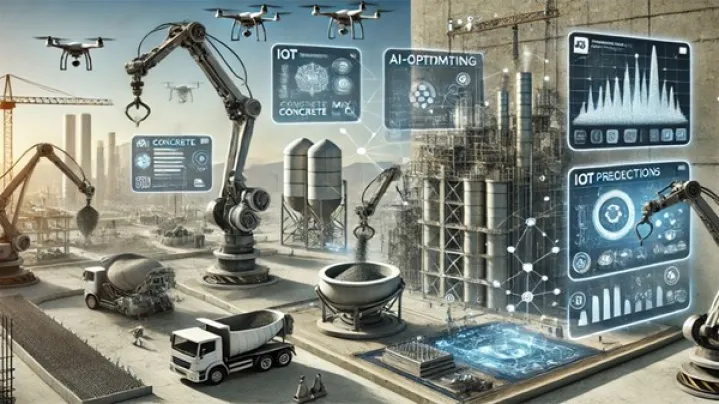
In recent decades, artificial intelligence (AI) has emerged as a transformative force, driving digital revolutions across various sectors worldwide. One of the most impacted fields is architecture, especially in Egypt, where urban growth is accelerating rapidly. Today, AI is not just an assisting tool but a key driver in redefining design processes, construction, urban planning, and the creation of smarter, more sustainable cities.
Traditionally, architectural design relied heavily on the creativity and expertise of architects, utilizing manual tools and conventional software. However, AI has dramatically changed the equation, introducing advanced software capable of:
1. Generating Multiple Design Options
AI algorithms can analyze vast amounts of data—such as utilization studies, aesthetic preferences, and environmental considerations—to propose a variety of design solutions based on pre-set criteria. This enables architects to explore a broader spectrum of creative possibilities and select the most suitable options.
2. Optimizing Building Factors
AI can simulate multiple scenarios for building layouts, aiming to maximize energy efficiency, natural light and ventilation, and cost-effectiveness. These optimizations contribute to the development of more sustainable and economically efficient structures.
3. Personalizing Designs for Users
By analyzing users’ preferences and lifestyle needs, AI can tailor designs to individual requirements, creating living spaces that match diverse ways of life. This trend has become central in modern residential projects where customization is increasingly important.
AI’s impact extends beyond design, deeply influencing the construction phase through several key aspects:
1. Smart Project Management
AI-powered project management tools track project progress in real time, predict delays, and optimize resource allocation. This ensures that projects stay on schedule and within budget, reducing risks and losses.
2. Robotic Construction
Egyptian construction sites are witnessing the rise of smart robots capable of tasks like bricklaying, concrete pouring, and even complex finishing works. These robots operate faster and more accurately, minimizing human error and reducing both construction time and costs.
3. Safety Monitoring on Site
Certain AI systems employ cameras and sensors to monitor construction sites, detecting hazards or unsafe practices. These systems instantly alert supervisors, enhancing worker safety and reducing accidents.
Urban planning is one of the most complex processes, requiring consideration of numerous variables—population growth, traffic, environmental and economic factors. Here, AI brings revolutionary capabilities:
1. Big Data Analysis
AI is used to analyze massive datasets related to demographics, population behavior, traffic patterns, air quality, and more. These analyses enable informed decision-making regarding the direction of urban development and infrastructure planning.
2. Predicting Future Trends
With its predictive power, AI can forecast changes in population growth, shifts in mobility patterns, or the emergence of new economic zones. This allows urban planners to be proactive, designing cities that can meet future needs.
All indicators suggest that AI will remain a primary driver of architectural evolution in Egypt in the coming years, with several key features emerging:
1. Smart Cities
Egypt’s new cities will increasingly rely on AI applications for resource management, reducing energy consumption, and providing smart services for residents—significantly improving quality of life.
2. Sustainable Architecture
AI will help advance sustainable building practices by optimizing designs to minimize waste, increase energy efficiency, and reduce the environmental impact of construction.
3. Virtual and Augmented Reality Technologies
When combined with AI, virtual reality (VR) and augmented reality (AR) technologies will allow architects and clients to explore designs in realistic virtual environments, enhancing collaboration and project vision clarity.
4. AI-Driven Creativity
AI’s role will go beyond analysis to become a creative partner for architects, drawing inspiration from historical design trends and generating new, unique ideas.
Despite the vast opportunities, integrating AI into Egyptian architecture faces several challenges, including:
Recommendations:
Encourage collaboration between universities and companies to develop innovative solutions, invest in digital infrastructure, and adopt policies that support innovation while maintaining information security.
AI has become an inseparable component of the future of architecture in Egypt. From design and construction to urban planning, AI is reshaping the industry, making it more efficient, sustainable, and creative. As technology continues to evolve, these positive impacts will only grow, paving the way for smarter Egyptian cities ready to meet the needs of future generations.