
​
Home
Financing

19225

Logo

Get the app

Auctions

Live Auction
Upcoming auctions

Cars

Buy Now Cars
Import Now Cars

About Biddex

About Us
How It Works?
FAQs
Terms and conditions
Privacy Policy

Contact Us

19225

Support@Biddex.com

© 2026 Biddex. All Rights Reserved.

The Trademark BIDDEX Is Owned by Euro Tech.
Home
Real States NEWS
Everything You Need to Know About the New Administrative Capital Area in Egypt

Everything You Need to Know About the New Administrative Capital Area in Egypt

Published in
Wednesday 6 August 2025
Everything You Need to Know About the New Administrative Capital Area in Egypt

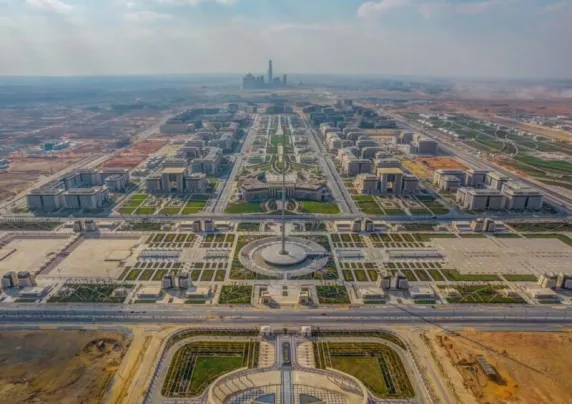
Egypt’s New Administrative Capital (NAC) has quickly risen as one of the most ambitious urban projects in the Middle East. As interest grows among investors, homeowners, and developers, one critical factor stands out: the New Administrative Capital area.

In this article, we answer the most frequently asked questions about the size, distribution, and investment potential of the NAC. Understanding how the area is structured can be the key to making smart real estate decisions in Egypt’s newest smart city.

What is the total area of the New Administrative Capital?

The New Administrative Capital area covers an impressive total of approximately 170,000 feddans (about 714 square kilometers). That’s more than twice the size of Greater Cairo!

Key facts:

  • Designed to accommodate over 6.5 million residents
  • Built in 3 main phases, with each phase including residential, commercial, administrative, and green zones
  • Strategically located between Cairo and the Suez Canal for maximum connectivity

This vast area makes NAC the largest urban development project in modern Egyptian history.

How is the New Administrative Capital area divided?

One of the most unique features of the New Administrative Capital area is its well-planned zoning:

  • Residential areas: Take up about 40% of the total area
  • Government district: Includes ministries, parliament, presidential palace
  • Business districts: Such as the Central Business District (CBD) and Downtown
  • Green zones: Parks, recreational spaces, and walking promenades
  • Educational zones: Universities, international schools, training centers
  • Infrastructure and transportation: Roads, smart traffic systems, monorail stations

This careful distribution provides a balanced environment for living, working, and investing.

What is the size of the Government District in the New Capital?

The Government District is the administrative heart of the NAC and one of the first areas to be completed:

  • Covers about 550 feddans
  • Includes 34 ministerial buildings, Parliament, Cabinet, and Presidential headquarters
  • Equipped with smart infrastructure and integrated security systems
  • Fully operational and already hosting several government institutions

Its central location and high-security design reflect the city's futuristic and organized urban vision.

How much area is allocated for residential districts?

Residential zones occupy a significant portion of the New Administrative Capital area, offering a wide range of units and lifestyles:

  • Spread across 7 main residential districts (R1 to R8)
  • Housing types include apartments, villas, duplexes, and townhouses
  • Over 60,000 feddans dedicated to residential use
  • Includes both government-developed housing (e.g., Sakan Misr, JANNA) and luxury compounds

This allocation ensures that housing demand is met for both middle-income and high-end segments.

What is the total green space area in the New Administrative Capital?

Green space is one of the most impressive aspects of NAC’s planning:

  • The Central Park (Capital Park) spans over 10,000 feddans, making it one of the largest urban parks in the Middle East
  • Green areas make up approximately 35-40% of the total capital area
  • Neighborhoods are designed with landscaped parks, jogging tracks, and pedestrian zones
  • A long 8-kilometer green spine runs across the city

This approach enhances quality of life and adds significant value to nearby properties.

Why is it important to study the New Administrative Capital area before buying?

Understanding the New Administrative Capital area isn’t just helpful—it’s essential. Here’s why:

  • It helps buyers choose the right location (residential, commercial, or administrative)
  • Affects the long-term investment value of your property
  • Allows you to identify high-growth zones with future infrastructure plans
  • Influences pricing based on proximity to business hubs or green spaces

Real estate decisions in the NAC should always be based on location intelligence, not just prices.

Is the New Administrative Capital area larger than Cairo?

Yes — and by a wide margin. The New Administrative Capital area is significantly larger than Cairo:

  • NAC: approx. 170,000 feddans (~714 km²)
  • Cairo: approx. 80,000 feddans (~336 km²)

That means the New Capital is more than twice the size of Cairo, offering vast space for structured development, modern infrastructure, and futuristic urban planning.

This size advantage supports smart traffic flow, organized zoning, and low population density compared to the capital’s overcrowding.

What is the difference between Phase 1 and Phase 2 in terms of area?

The New Administrative Capital area is being developed in three phases. Each has a unique role in the city’s long-term vision.

  • Phase 1:
    • Covers approx. 40,000 feddans
    • Includes government district, residential zones (R1–R7), Downtown, CBD
    • Almost fully developed and operational
  • Phase 2:
    • Covers approx. 47,000 feddans
    • Focuses on expanding residential areas and introducing new business hubs
    • Infrastructure works have already begun

This staged development ensures balanced growth and investment potential over the next decade.

What is the area of the Central Business District (CBD)?

The CBD is the economic engine of the New Capital and a key driver of commercial real estate:

  • Area: approx. 1,700 feddans
  • Home to Africa’s tallest tower, the Iconic Tower (385 meters)
  • Includes 20+ commercial skyscrapers, international hotel chains, and office spaces
  • Developed in collaboration with major Chinese and international contractors

Its strategic location in the heart of the New Administrative Capital area boosts its value for long-term commercial investments.

Are there enough commercial project areas in the New Capital?

Absolutely. Commercial spaces have been carefully allocated across the New Administrative Capital area to meet future demand:

  • Downtown: a vibrant hub for retail, services, and administrative offices
  • CBD: premium space for multinational corporations and banks
  • Residential districts: integrated with commercial zones for accessibility
  • Multiple malls, business towers, and mixed-use projects under development

These diverse commercial offerings make the New Capital a rising destination for entrepreneurs and corporate expansions.

Does the New Administrative Capital area meet future real estate demand?

Yes, and that’s one of its core strengths:

  • Designed to accommodate 6.5–7 million people
  • Flexible land allocation for horizontal and vertical expansion
  • Government continuously releases new plots for developers
  • Long-term planning guarantees scalable infrastructure and services

The New Administrative Capital area was not built just for today — it’s engineered to grow with Egypt’s population and economy for decades to come.

How does the New Administrative Capital area impact real estate investment?

Location and area planning play a huge role in real estate ROI — and NAC is a textbook example:

  • Wide area allows for diverse investment options: residential, commercial, administrative
  • Proximity to key zones (CBD, Downtown, parks) affects property value
  • Strong infrastructure boosts buyer confidence and project sustainability
  • Strategic urban planning ensures long-term capital appreciation

In short, the New Administrative Capital area offers investors a rare chance to get in early on a city built for the future.

The New Administrative Capital area is more than just land — it's the foundation of Egypt's future. From its massive scale to smart urban planning, the NAC offers exceptional opportunities for investors, homeowners, and developers alike.

By understanding the zoning, phase distribution, and green spaces, you can make informed real estate decisions that align with your goals. Whether you're investing in a residential apartment or launching a commercial project, area knowledge is power.

Frequently Asked Questions About the New Administrative Capital Area

1. How big is the New Administrative Capital area?
The NAC spans approximately 170,000 feddans (around 714 km²), making it one of the largest planned cities in the region.

2. Is the New Administrative Capital larger than Cairo?
Yes. The New Administrative Capital is more than twice the size of Cairo, offering ample room for expansion, smart zoning, and modern infrastructure.

3. What percentage of the New Administrative Capital area is residential?
Roughly 40% of the total area is allocated to residential zones, including government-developed housing and private compounds.

4. Are there enough commercial zones in the New Administrative Capital?
Absolutely. Key areas like Downtown and the Central Business District are designed to support large-scale commercial activity.

5. Why should investors care about the size of the New Capital?
Understanding the city's scale helps investors identify high-growth zones, evaluate proximity to key landmarks, and forecast property value appreciation.

6. How does the area distribution affect property prices?
Properties near the CBD, parks, or government districts tend to have higher value due to their location, accessibility, and future potential.