Paris Motor Show 2026: European and Chinese Automakers Clash
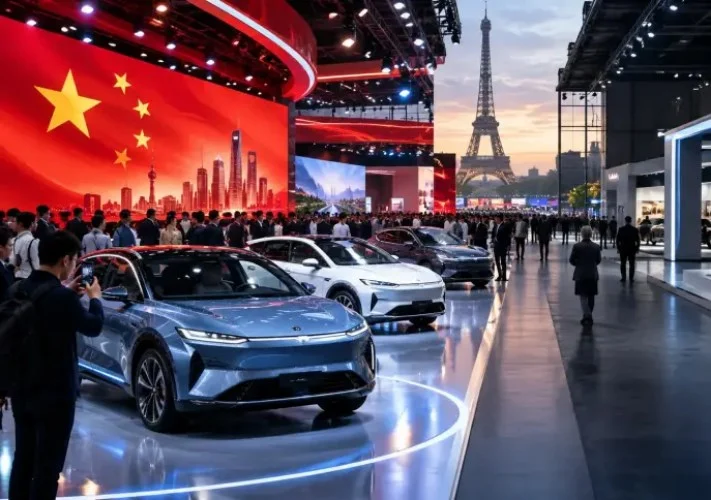
The automotive world converges on the French capital for the 2026 Paris Motor Show, marking a defining battleground for market share between European legacy automakers and rising Chinese challengers.
Showcasing approximately 60 new models, the exhibition unfolds against a backdrop of intense competitive pressure as European manufacturers grapple with sluggish domestic demand and aggressive expansion from Chinese brands, coinciding with regulatory moves to govern hybrid imports and boost local manufacturing.
According to Reuters, the motor show follows a preliminary agreement between the European Union and China to cap Chinese hybrid vehicle imports at 350,000 units annually, as confirmed by a European Commission official, with implementation mechanics currently under negotiation.
Renault and Stellantis Counter-Attack to Regain Market Share
Speaking at the event, Renault CEO François Provost noted that current hybrid vehicle inflows from China into Europe are "unsustainable," expressing a preference for managed trade agreements over a full-scale trade war.
Approximately 20 Chinese automotive brands are exhibiting at this year's show—including BYD and Chery—double the participation rate of the 2024 edition.
This push is fueled by shrinking domestic sales in China, which plunged 20% in the first half of the year, alongside a threefold surge in Chinese hybrid vehicle exports to the EU, reaching $7.5 billion over the same period.
In response, European automotive giants are rolling out comprehensive product offensives. Stellantis, the world’s fourth-largest automaker, is launching six new production models across its European portfolio alongside nine concept vehicles.
The conglomerate is also pressing forward with joint EV manufacturing initiatives with China’s Leapmotor, leveraging shared architectures to build compact electric vehicles at Fiat’s Italian production facilities.
Volkswagen Faces Pressures and Quarterly Sales Decline
Meanwhile, Volkswagen reported a 14.3% drop in vehicle deliveries during the third quarter of 2026—its steepest quarterly decline in four years. The German automotive giant pointed to weakening demand in China alongside softer delivery volumes in North America and Western Europe.
Volkswagen CEO Oliver Blume emphasized that all market participants selling vehicles in Europe must compete on a level playing field, actively contributing to local job creation and regional value addition.
"Made in Europe" Policies Set to Reshape Local Manufacturing
Adding to the competitive dynamic, the European Commission is reviewing legislation introducing strict "Made in Europe" criteria, which would mandate minimum local sourcing thresholds for electric vehicles to access key European market incentives.
French President Emmanuel Macron stated that a bilateral consensus between Paris and Berlin regarding these local-content regulations is imminent, underlining the EU's resolve to safeguard its industrial manufacturing base.
Adaptation is already underway: Chinese manufacturers are increasingly shifting toward localized production through strategic joint ventures.
Geely announced plans to manufacture electric SUVs at a Ford plant in Spain, signaling that the future of the European automotive landscape will be dictated not just by retail pricing and styling, but by production footprints, local sourcing ratios, and direct industrial investments.